
Navigating Marriage During Menopause | Couples Therapy TX
Menopause and Marriage: Navigating Emotional and Relational Shifts
Menopause is just hot flashes and no more periods, right?
If only.
When one partner enters menopause, the changes go far beyond the physical. Sleep disruptions, mood swings, shifting libido, and an altered sense of self can have a ripple effect, touching nearly every corner of your life and your relationships. And yet, so many couples face this transition without a roadmap. Sure, menopause is a natural biological process, but that doesn’t mean going through it feels natural. If you are the one experiencing it, hormonal shifts can feel overwhelming and isolating. For your partner, feeling shut out or unsure how to help can be confusing and even painful. Each year, more than 1 million women in the U.S. enter menopause, so if you and your spouse are navigating this season, you’re not alone. And you don’t have to figure it out in silence.
What Menopause Can Look Like Inside a Marriage
The symptoms of perimenopause and menopause are becoming more openly discussed in medical contexts, but their relational impact often goes unaddressed. Common experiences that affect relationships include:
Emotional volatility and irritability.
Fluctuating estrogen levels can intensify emotional responses, making small disagreements feel larger and harder to recover from. Your partner may feel like they’re walking on eggshells without understanding why the dynamic has shifted.
Changes in sexual intimacy.
Decreased libido, vaginal dryness, and physical discomfort during sex are common during perimenopause and into postmenopause. These changes can lead to reduced frequency and enjoyment of intimacy and may leave both of you feeling rejected or disconnected.
Sleep deprivation.
Night sweats and insomnia can be exhausting. And then there’s the person next to you. When one partner is awake and restless, both partners can rack up sleep deficits, and chronic fatigue is a known relationship stressor.
Identity and self-worth shifts.
Brain fog, body changes, and supercharged emotions can make you wonder who you even are now. Plus, menopause often coincides with broader life transitions, including children leaving home, career changes, and aging parents. The emotional weight of these simultaneous shifts may lead to a deeper questioning of purpose and identity, which can impact how you show up in your marriage.
Why Couples Often Struggle to Talk About It
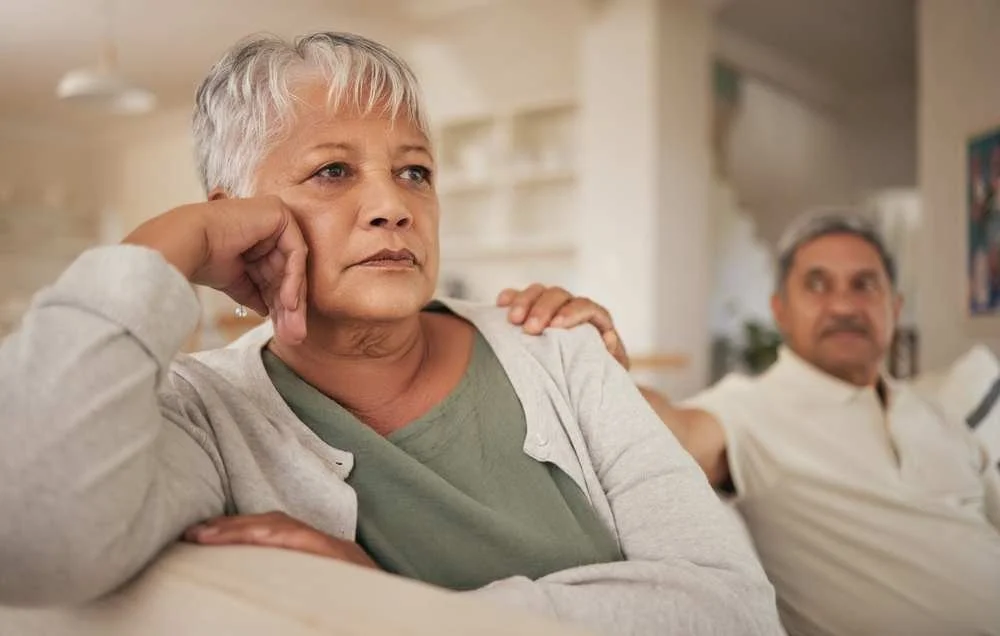
There’s a particular kind of loneliness that comes from going through something significant while feeling unseen by the person closest to you. Many couples fall into patterns of avoidance around menopause, not out of indifference, but because of the helplessness that comes along with neither partner knowing what to say or do. You may feel shame, grief, or frustration and worry that talking about the changes you’re experiencing will burden your spouse or invite unwanted advice. Your partner may feel uncertain and powerless, pulling back to avoid saying the wrong thing. Over time, this mutual withdrawal can create distance that neither of you intended. What starts as a medical transition can quietly become a relational wound.
How Couples Therapy Can Help
This is exactly where marriage counseling becomes invaluable. Couples therapy offers a structured, supportive space to talk about what’s been hard to say at home. A skilled therapist can help both partners move from avoidance and frustration into genuine understanding. In couples therapy for menopause-related concerns, work often focuses on:
Building a shared language.
Many couples simply don’t have the vocabulary to talk about perimenopause and menopause with honesty and tenderness. Therapy can help you name your feelings and experiences without blame.
Reframing intimacy.
Physical intimacy can look different during this time, and that’s okay. Couples therapy can facilitate exploration of new ways to connect physically and emotionally, expanding your definition of closeness.
Addressing unspoken resentments.
When needs go unmet over a long stretch of time, resentment accumulates. A therapist can guide couples like you through these tender places safely, before they harden into lasting damage.
Supporting the menopausal partner without minimizing.
Marriage counseling helps the non-menopausal partner learn how to offer genuine support, not by fixing, but by truly listening and staying present.
This Is a Transition, Not an Ending
Menopause asks a lot of a marriage. But it can also offer something unexpected: an invitation to know each other more deeply. Couples who can navigate this transition together, with honesty, curiosity, and professional support when needed, may find they emerge on the other side with a renewed sense of partnership.
