
Looking Beneath the Surface: How Play Therapy Turns Behavior Into Communication
With a new school year around the corner, behavior challenges often start to spike.
When meltdowns, defiance, or sudden withdrawal happen, parents are usually left asking the same question: "Why is my child acting this way?" It can feel exhausting, confusing, and overwhelming.
But what if behavior isn't just "good" or "bad"? What if behavior is actually communication?
Dr. Shannon Akin, a brilliant psychologist, once shared a perspective that changes everything:
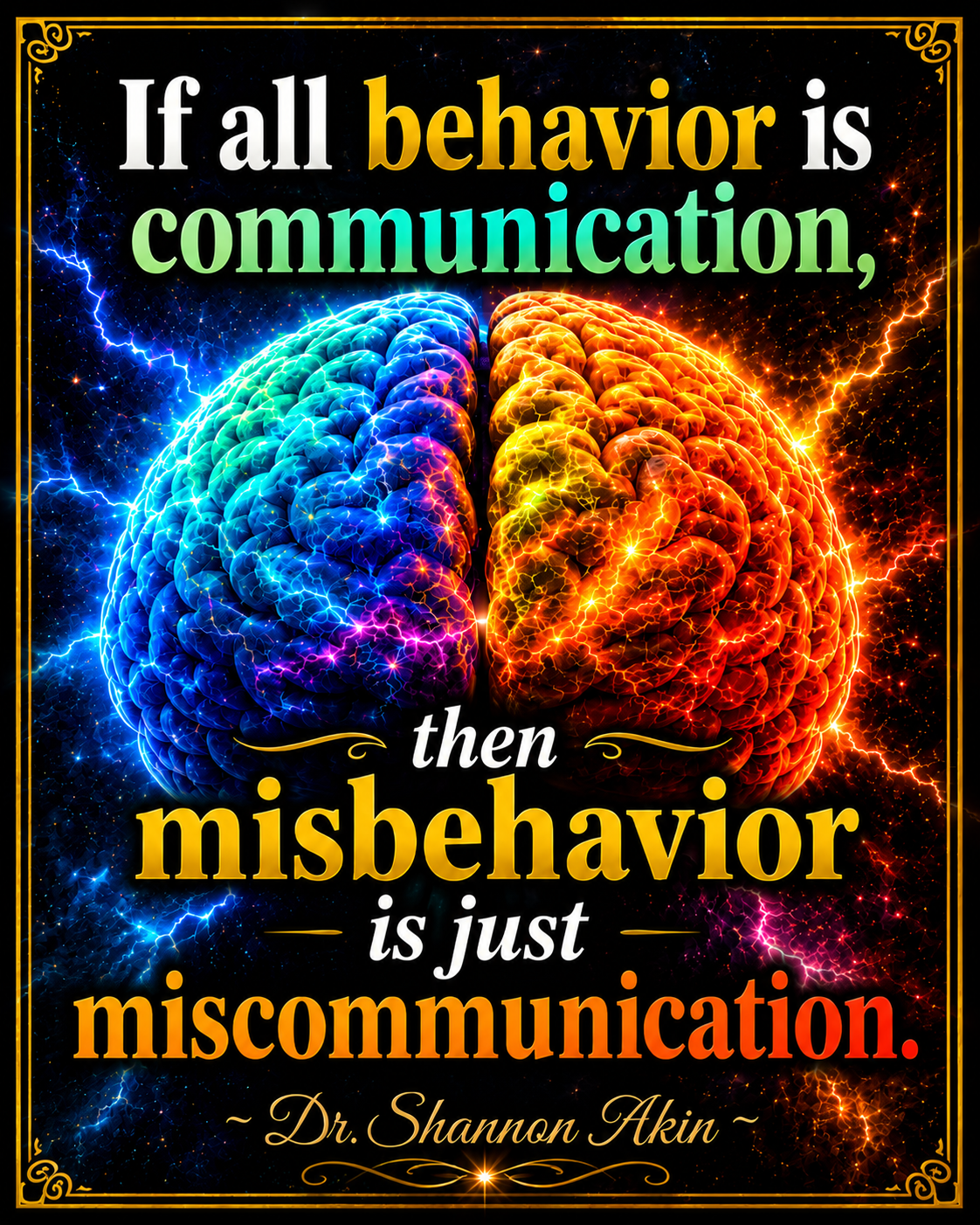
“If all behavior is communication, then misbehavior is just miscommunication.”
Children Express What They Can't Express in Words
Children don't always have the words to explain what they're feeling. Their brains are still developing, and their emotional vocabulary is limited. Even adding in that some children are minimally verbal, or nonverbal. When emotions get too big, behavior becomes their primary language.
Underneath a tough moment, a child is often struggling with:
Fear, anxiety, or shame
Sensory overload
Physical discomfort or fatigue
Changes in routine
Feeling disconnected or misunderstood
Think about a time you had a brutal day at work. You were tense, exhausted, and running on empty. You probably found yourself snapping at loved ones or struggling to focus.
Children experience that exact same physical stress. They just lack the self-awareness and vocabulary to say, "I'm anxious" or "My body feels out of control." Instead, they yell, cling, refuse, or completely shut down.
Every Behavior Has a Purpose
This doesn't mean bad behavior should go unchecked. Children still need limits, consistency, and boundaries. However, effective discipline begins with curiosity, not assumptions.
Instead of asking, "How do I stop this behavior right now?" try shifting to:
What is my child trying to tell me?
Could they be overwhelmed, scared, or dysregulated?
Is there an unmet physical or emotional need?
When we trade quick reactions for curiosity, we shift from simply suppressing a behavior to actually understanding what’s driving it. This gets us closer to a solution.
Why Play Matters
Children communicate through play long before they can express themselves through conversation. What looks like "just playing" is actually a child processing their inner world, working through conflicts, and expressing fears they can't yet put into words.
This is why play therapy is so transformative:
Play becomes their language: In a safe, supportive room filled with intentional toys and creative outlets, children can safely explore difficult feelings.
They build coping skills: Children develop greater emotional awareness and learn healthier ways to self-regulate.
It translates to real life: As kids understand what's happening inside, they learn to communicate better outside the therapy room: at home, at school, and with family.
Looking Beyond the Surface
When you look beneath the surface of a tough behavior, you usually don't find a child trying to be difficult. You find a child trying to be understood.
Every meltdown or shutdown is an invitation to ask, "What lies beneath this?"
If your child is struggling with big emotions, frequent outbursts, or anxiety that traditional discipline hasn't helped, play therapy can offer the support they need to feel heard, regulated, and understood. Even consulting with a trained therapist can be a great step to provide assistance in supporting and understanding your child’s behavior.
