
School Anxiety: What Parents Need to Know
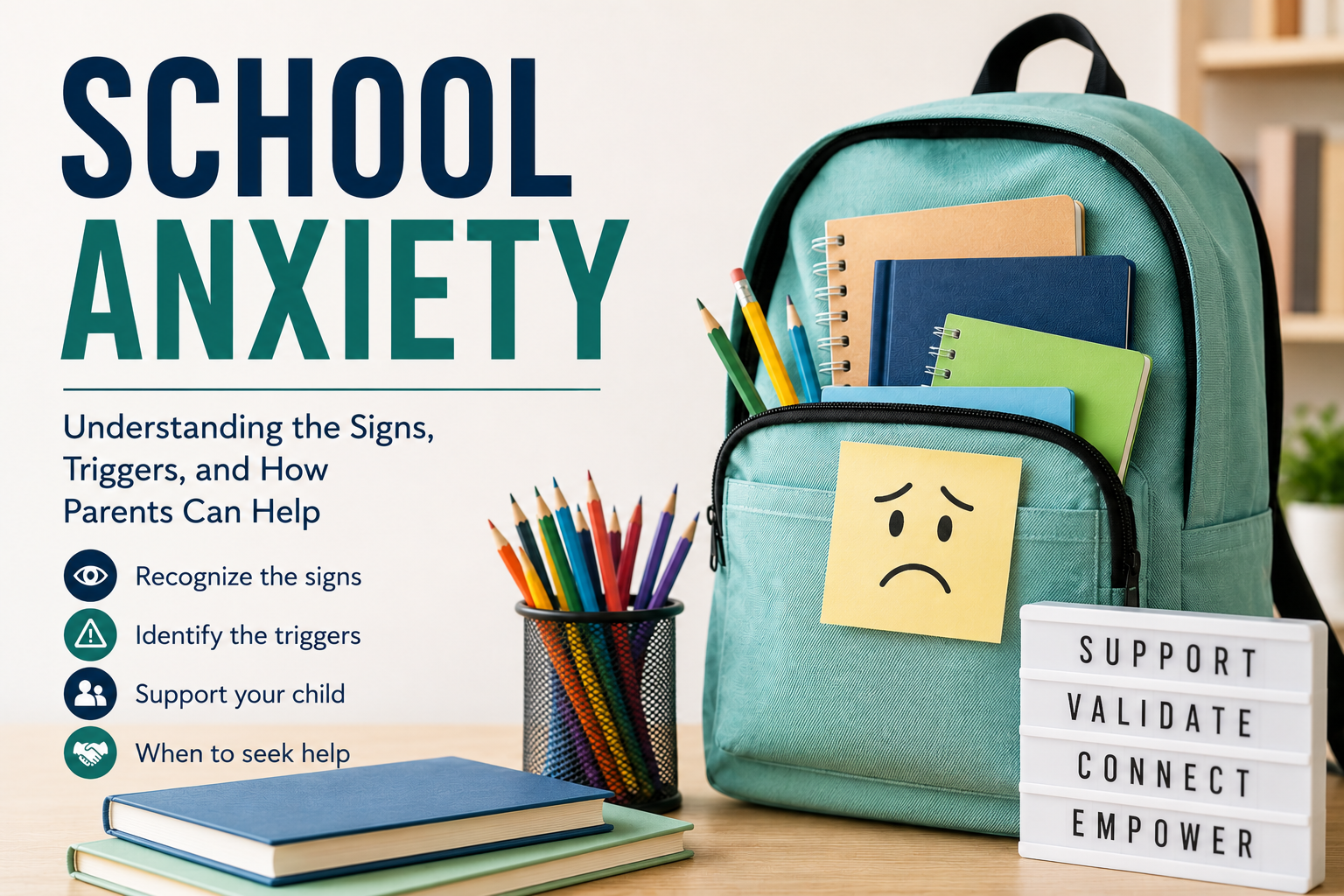
School can be an exciting place for children to learn, grow, and build friendships. But for some kids, it can also become a constant source of worry.
In my practice as a therapist, I have noticed that school anxiety rarely looks the way we expect it to. Children rarely sit down and say, "I am feeling anxious." They do not developed insight or vocabulary for it. Instead, that stress shows up through their behavior, their physical body, their mood, or sudden changes in how they function at home and in the classroom.
The first step toward helping your child is simply learning how to read what they are trying to communicate.
Signs Your Child Might Be Struggling
Anxiety can manifest in many different ways. You might notice:
Frequent stomachaches or headaches, particularly on weekday mornings
Trouble falling asleep, waking up through the night, or heavy evening worries
Crying, meltdowns, or intense distress before leaving for school
Refusing to get in the car, or asking to stay home
Heightened irritability, sudden anger, or emotional outbursts
Becoming unusually quiet, distant, or withdrawn
Constantly asking for reassurance about their schedule or safety
A intense fear of making mistakes, disappointing others, or falling short of perfection
Avoiding specific classes, assignments, or group activities
Trouble focusing or finishing homework
Losing interest in activities or friends they used to love
Frequent trips to the school nurse's office
Statements like "I can't do this," "I'm bad at everything," or "Please don't make me go."
Sometimes anxiety looks like avoidance. Sometimes it looks like angry outbursts. Other times, it hides behind perfectionism or complete shutdown. And very often, a child who seems to hold it together all day at school completely falls apart the moment they walk through the front door at home.
Instead of focusing only on what your child is doing, try shifting the question to: What might my child be feeling underneath this behavior?
What Triggers School Anxiety?
School anxiety rarely stems from just one thing. It is usually a combination of factors piling up over time.
Academic Stress Your child might be overwhelmed by tests, grades, or the fear of falling behind. Tasks like reading aloud, making mistakes in front of peers, or simply feeling like everyone else understands the lesson faster can create heavy pressure.
Social Dynamics Navigating friendships can be tough. Kids often worry about being left out, teased, or failing to fit in. Public speaking, group work, and shifting social groups can all make the school day feel unpredictable.
Separation and Change Some children find it hard to be away from the safety of home and family. Others struggle when routines shift, whether that means a substitute teacher, moving to a new classroom, starting at a new school, or returning after a long break.
Learning Difficulties or ADHD When a child consistently struggles with attention, organization, reading, or math, school becomes exhausting. After repeated moments of frustration, they may internalize thoughts like "I am always getting into trouble" or "I am the only one who doesn't get it." Over time, this erodes their self-esteem and feeds directly into anxiety.
What Is the Anxiety Trying to Tell Us?
This is perhaps the most important question we can ask.
Rather than focusing solely on how to make the anxiety stop, we can ask what the anxiety is trying to communicate. Your child might be silently telling you:
"I am terrified of failing."
"I feel like I don't belong here."
"I don't know how to ask for help."
"I'm worried something bad is going to happen."
"I am overwhelmed by these huge feelings."
Anxiety is a signal that something feels unsafe, uncertain, or bigger than a child's current ability to cope.
Our goal is not to eliminate every uncomfortable situation from our children's lives. Instead, we want to help them name their feelings, learn effective coping strategies, and realize that they are capable of doing hard things.
When You've Tried Everything
You have had the long talks. You have emailed the teacher. You have tried reward charts, firmer routines, earlier bedtimes, and gentle reassurance, yet your child is still struggling every day.
When anxiety begins to interfere with school attendance, learning, friendships, or sleep, bringing in outside support can make a world of difference.
Working with a therapist allows you to look beyond the surface behavior. Therapy can help a child learn emotional regulation, rebuild lost confidence, and acquire real-world coping tools. It also gives parents a clear framework for supporting their child without accidentally enabling avoidance.
You Don't Have to Figure This Out Alone
If you are worried about your child's anxiety, starting with individual therapy or a parent consultation is a great next step.
A consultation gives you a space to talk through what you are seeing at home, explore potential triggers, and outline a clear plan forward.
At Resilient Roots Counseling, we know that understanding a child's behavior is the first step toward meeting the real need underneath it. We help children manage worry, build self-esteem, and handle life's challenges with confidence.
Behavior is communication. We just need to learn how to listen to what it is saying.
Rooted Reflection What might my child's anxiety be trying to tell me that they don't have the words to say just yet?
